
Packing for a photography trip is an art form — and for most of my career, I was terrible at it. I'd stuff every lens, every accessory, every "just in case" gadget into an oversized bag, then spend the trip with a sore back and unused equipment. After 20 years of shooting across 17 countries, I've finally figured out what actually matters. Here's my complete travel photography gear list for 2026.
My Camera Body: Sony A6600
The Sony A6600 has been my daily driver since 2023, and it's the best travel photography camera I've owned. It's compact, the autofocus is remarkably fast, and the APS-C sensor produces images that hold up at any reasonable print size. I switched from a full-frame Canon DSLR, and the weight difference alone changed how I travel — I walk more, shoot longer, and actually enjoy carrying my bag.
If you're debating APS-C vs full-frame for travel, my honest take: unless you're printing wall-sized prints or shooting in near-darkness, a modern APS-C camera is more than enough. The weight and size savings translate directly into better photos because you're more comfortable and more willing to bring the camera everywhere.
Travel Lenses: Less Is More
Sigma 16mm f/1.4 (primary lens) — This lens lives on my camera. On an APS-C body, it gives you roughly a 24mm equivalent — wide enough for landscapes and architecture, fast enough for low light and astrophotography. If I could only travel with one lens, this would be it without hesitation.
Sony 55-210mm f/4.5-6.3 (occasional) — I bring this maybe one trip in three, when I know I'll need reach — wildlife, distant architecture, or compressed landscape perspectives. It's not fast, but it's light, and for travel that trade-off works.
Why I Stopped Carrying a Zoom
I used to pack a 70-200mm on every trip "just in case." The result? I used it maybe twice per trip, and both times I could have cropped. Primes force you to move your feet, and moving your feet forces you to find better compositions. That's not philosophy — it's a pattern I've noticed over thousands of photos.
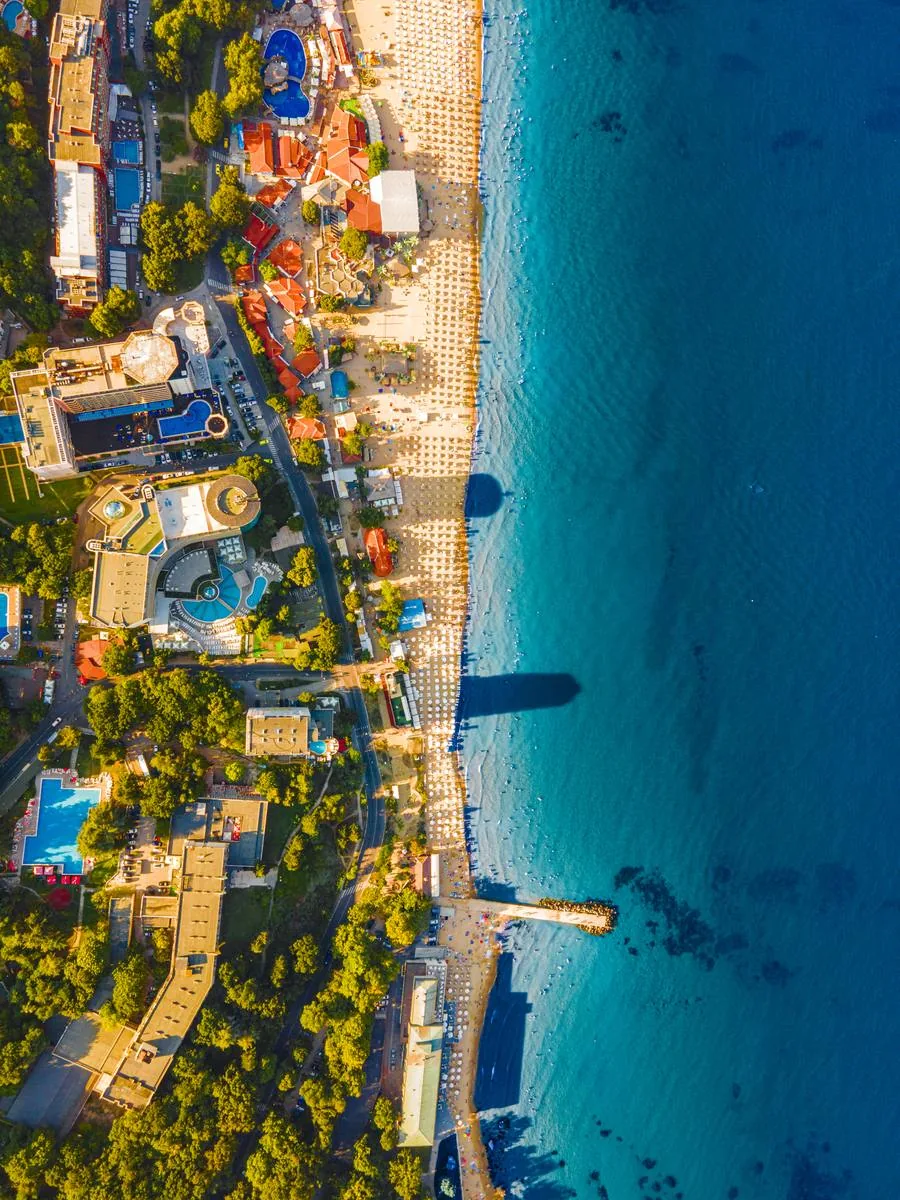
Drone: DJI Mini 3 Pro
Half my portfolio is aerial work, and the DJI Mini 3 Pro is the reason. Under 250 grams means fewer regulations in most countries (crucial for travel), the image quality punches well above its weight, and it fits into my camera bag without a separate case. I carry three batteries and a set of ND filters. If you're a landscape or travel photographer without a drone, you're missing an entire dimension of your environment.
What I Stopped Packing
The Tripod
This will be controversial, but hear me out. I've lost two tripods at airports. I have a bad back. And modern image stabilization plus high ISO performance has made tripods optional for 90% of what I shoot when traveling. Unless your trip specifically includes astrophotography, long-exposure waterfalls, or professional product work, the tripod adds weight that costs you more in comfort and mobility than it gives you in sharpness.
The Backup Camera Body
I used to be that photographer — the one carrying two bodies "for safety." But in 20 years of shooting, I've never had a camera fail on a trip. Not once. The weight of a second body equals a good lunch, two extra hours of comfortable walking, and the mental freedom of a lighter bag. Your phone is your backup camera. It's fine.
Laptop
For trips under a week, I stopped bringing a laptop. I carry enough SD cards to cover the whole trip, do a quick review on the camera screen each evening, and edit everything when I'm home. The laptop adds weight, needs charging, and honestly — I make better editing decisions when I've had some distance from the photos.
The One Upgrade That Changed Everything
The biggest improvement to my travel photography wasn't a camera or a lens. It was a comfortable backpack. I switched to a smaller bag with proper hip support and chest straps, and the difference was immediate — hiking further, shooting longer, and actually enjoying the process instead of counting the minutes until I could put my bag down.
Your bag determines how far you walk. How far you walk determines what you find. What you find determines what you shoot. Invest in the bag.
Complete Travel Photography Gear Checklist
Here's everything I pack for a typical 7-10 day photography trip: Sony A6600 body, Sigma 16mm f/1.4, DJI Mini 3 Pro with 3 batteries and ND filters, 3x 64GB SD cards, 2 camera batteries, USB-C charger (charges both camera and drone), a circular polarizer, lens cleaning kit, and a comfortable camera backpack that fits as carry-on luggage. Total weight: under 5kg. That's it.
Twenty years ago, I started with my dad's Zenith film camera and four rolls of film for an entire school trip. Every shot cost money, so I had to think before pressing the shutter. The gear has changed dramatically since then — but the principle hasn't. The best travel photography gear is the set that you'll actually carry all day, every day, without wishing you'd left it at the hotel.