
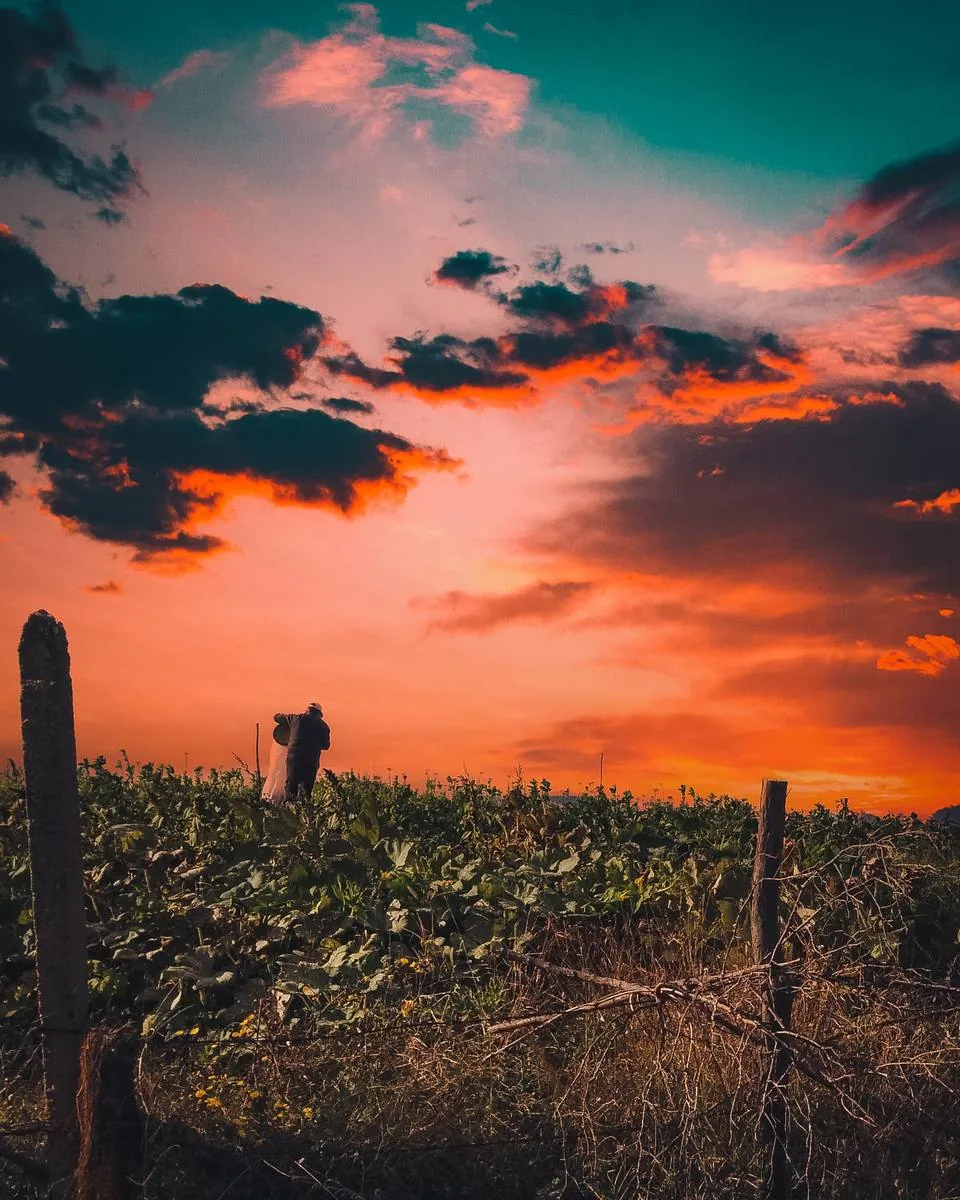
Golden hour is the most talked-about concept in photography — and for good reason. That warm, directional light in the hour before sunset and after sunrise makes almost everything look beautiful. But here's what most golden hour guides won't tell you: the light is the easy part. Knowing where to stand, what to shoot, and what happens after sunset separates a pretty photo from a portfolio-worthy one.
What Is Golden Hour (And When Exactly Is It)?
Golden hour is roughly the first hour after sunrise and the last hour before sunset, when the sun is low on the horizon and produces warm, soft, directional light. The exact timing varies depending on your location and the time of year — in northern Europe during summer, golden hour can stretch well over an hour, while near the equator it can be as short as 20 minutes.
Apps like PhotoPills and The Photographer's Ephemeris are essential for planning. They show you exactly when golden hour starts and ends at your specific location, plus the direction and angle of the sun. I never shoot golden hour without checking these first.
How to Plan a Golden Hour Shoot
Scout at Noon
The single most useful golden hour photography tip I can share is this: visit your location when the light is "bad." Walk around at noon. Find your compositions. Figure out where the sun will be at golden hour. Check what's behind you (backlight can ruin or make a shot). Notice the foreground options.
When I shot the silhouette series in the Bulgarian wheat fields, I'd driven past the spot three times before I ever raised my camera. The first time, I noticed the field. The second time, I walked through it looking for angles. The third time, I arrived 90 minutes before sunset, set up, and waited. By the time golden hour hit, I wasn't searching for a shot — I was executing one I'd already planned.
Arrive Early
Show up at least 45 minutes before the "official" golden hour starts. You need time to set up, test compositions, and adjust your settings while the light is still stable. Rushing to find a composition during golden hour — when the light is changing by the minute — almost always leads to mediocre results.
Camera Settings for Golden Hour
Shooting Mode
I use Aperture Priority during golden hour. The light changes constantly, and letting the camera handle shutter speed while I control depth of field saves time and mental bandwidth. If you're comfortable with Manual mode, that works too — but check your exposure frequently as the light fades.
White Balance
Do not use Auto White Balance for golden hour photography. Auto WB will try to "correct" the warm tones, neutralizing the very thing that makes golden hour special. Set your white balance to Daylight (or around 5200K) to preserve the natural warmth. If you're shooting RAW (and you should be), you can fine-tune this in post, but getting it close in-camera helps you judge the scene more accurately.
Aperture and Focus
For landscapes, f/8 to f/11 gives you sharpness across the frame. For portraits or subject isolation, open up to f/2.8 or wider — the golden backlight creates beautiful bokeh and rim lighting at wide apertures. Focus carefully, especially when shooting into the sun, as lens flare can confuse autofocus systems.
Composition Tips for Golden Hour
Use the Long Shadows
When the sun is low, shadows stretch dramatically. These are compositional gifts — use them as leading lines, as textures, or as subjects in their own right. A person's shadow stretching across a field at sunset tells a story that the same scene at noon simply can't.
Shoot Into the Light
Backlighting — shooting towards the sun — creates silhouettes, rim light, and lens flare. Silhouettes work best when your subject has a recognizable outline (a person, a tree, a building) against a bright sky. Expose for the sky, let the subject go dark, and you have an instantly dramatic image.
Don't Forget to Turn Around
Everyone points their camera at the sunset. Turn 180 degrees and look at what the golden light is hitting behind you. Front-lit scenes during golden hour have a warmth and depth that's easy to miss when you're focused on the dramatic sky. Some of my best golden hour shots were taken facing away from the sun.
Blue Hour: The 10 Minutes Most Photographers Miss
Here's the part most golden hour guides skip entirely. The best light isn't always golden hour — it's the 10-20 minutes after sunset, known as blue hour or civil twilight. The sun is below the horizon, the harsh directional light is gone, and what's left is a soft, even glow that makes everything look cinematic.
During blue hour, the sky and the ground are roughly the same brightness, which means you can capture detail in both without HDR bracketing or graduated filters. The warm tones from the horizon blend with cool blues overhead, creating a color palette that's impossible to replicate at any other time of day.
My Hallstatt night shot — the one with the village lights reflecting in the lake — was taken during blue hour. That warm glow in the sky was the last light of the day. The silhouette wheat field shot? About 8 minutes after sunset, when the sky shifted from gold to pink. Most photographers had already packed up. I had the place to myself.
Golden Hour vs Blue Hour: When to Use Each
Golden hour is ideal for: warm portraits, backlit silhouettes, long shadow compositions, anything where directional light adds drama and depth.
Blue hour is ideal for: cityscapes (when artificial lights balance with the remaining sky light), water reflections, moody landscapes, any scene where even, soft light serves the story better than directional warmth.
My advice: always plan for golden hour, but always stay for blue hour. The transition between the two — those 5-10 minutes when the sky is still warm but the shadows have softened — is often when the most interesting photos happen.
My Pre-Shoot Checklist
Before any golden hour session, I run through four questions: Where will the sun be? What's my foreground? What's my subject? And will I stay for blue hour? If I can't answer the first three, I'm not ready. And the answer to the fourth one is always yes.
Golden hour gives you the light. But you have to bring the preparation, the composition, and the patience. Show up early, stay late, and remember that the best light often comes after everyone else has gone home.